

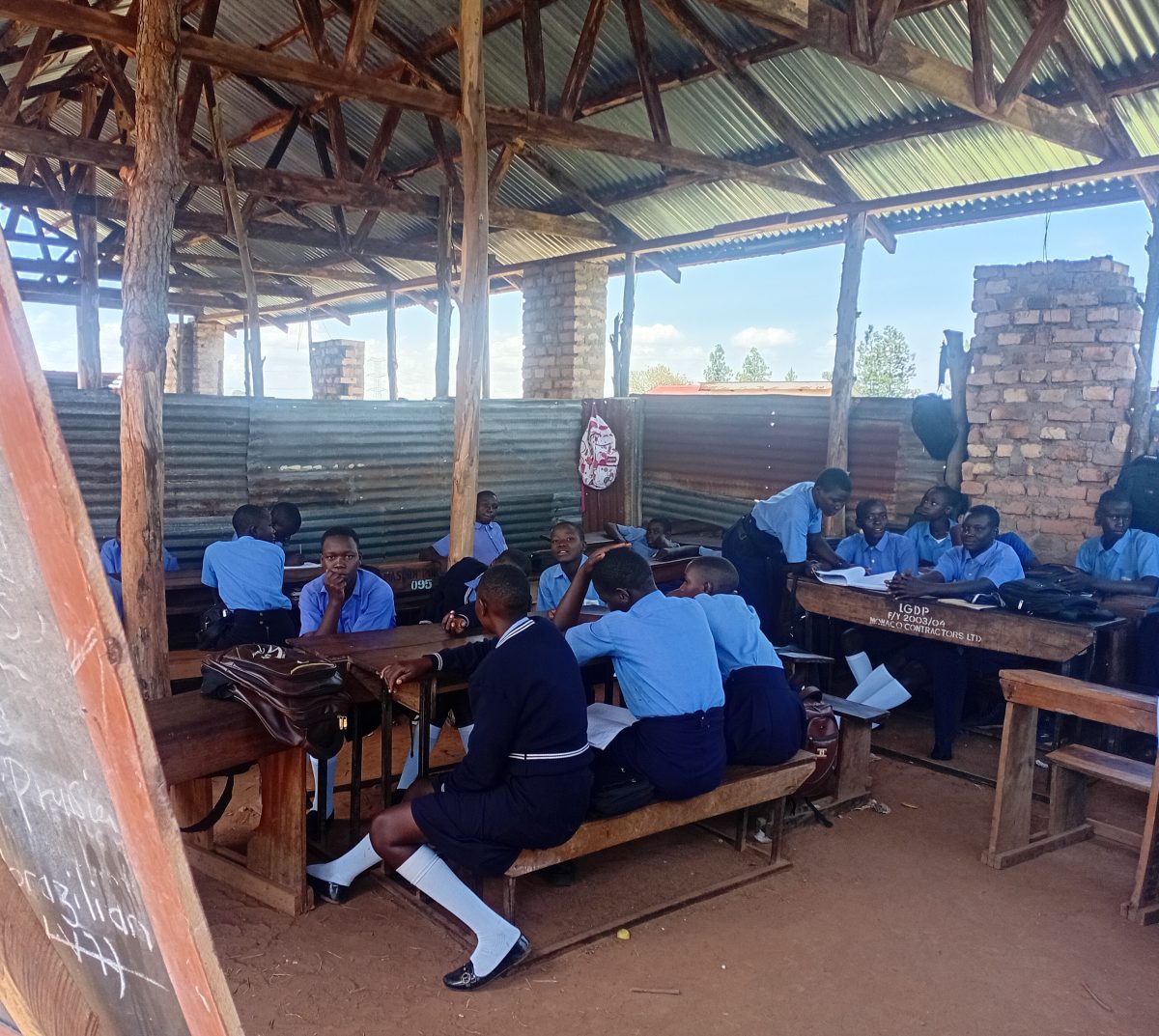
By Douglas Asiimwe
In the heart of Kiryandongo District, Masindi Port Secondary School is redefining what education means for girls in a community where long-standing cultural norms once placed cattle above classrooms. Among the predominantly Banyarwanda pastoralist community, a girl’s value has traditionally been tied to bride price, with early marriage seen as a pathway to wealth for the family.
“Girls are often grabbed on their way from school,” explains Nassuuna Eva, the Assistant Senior Woman Teacher. “After about a week, the grabbers come to the girl’s home to announce that they are holding her. What follows is a negotiation of bride price, usually in cows.”
For many girls, these abductions mark the abrupt end of their education. But through the support of the Uganda Secondary Education Expansion Project (USEEP), implemented by Windle International Uganda (WIU) in partnership with Joy for Children Uganda (JFC) and CEFORD, the school is steadily pushing back against these harmful practices.
Nayebare Grace, now in Senior Four, still remembers her frightening encounter.
“During my Primary Seven vacation, four men jumped out of a saloon car and ran toward me as I was returning from church. I escaped into a neighbour’s house. That day, I nearly lost my future.”
Kashabe Enid, 18 and in Senior Two, faces similar pressure at home.
“My father has over 100 cows, but when I was sent home for school fees, he told me to get married,” she says. “I begged him to at least let me finish Senior Four. He agreed, but men still come home wanting to marry me.”
Enid dreams of becoming a professional nurse, yet she acknowledges that her future depends heavily on whether community attitudes continue to change. Her older sister was married off at 15.
Even boys are not spared. During dry seasons, many are withdrawn from school to search for pasture for family livestock. These cultural and economic pressures have long contributed to low attendance, high dropout rates, and limited learning outcomes.
How USEEP Is Strengthening Protection and Shifting Attitudes
Under USEEP, Masindi Port Secondary School has adopted deliberate strategies to protect learners and reinforce the value of education—especially for girls.
With support from WIU and JFC, the school has:
- Converted a classroom into a temporary girls’ boarding section, providing a safe space and reducing the risk of abduction and early marriage
- Initiated regular community dialogues to sensitize parents on the importance of educating girls
- Received IEC materials on child rights, reporting pathways, and responsibilities of caregivers, which are displayed throughout the school and community
- Built teacher capacity in child protection, enabling staff to identify risks early, respond appropriately, and support learners to stay in school
“Parents are slowly realizing that educating a girl is more valuable than the cows they might receive,” Eva notes. “We are beginning to see positive change.”
Through these combined efforts, learners are increasingly aware of their rights and are more confident in seeking support. The community is gradually shifting from practices that undermine education toward attitudes that protect and nurture children’s potential.
A New Future for Girls in Masindi Port
The impact is already visible. Girls are walking to school with greater confidence, reporting threats when they arise, and daring to dream bigger. They are beginning to understand that their worth is not defined by the number of cows they bring, but by the futures they choose to pursue.
Funded by the World Bank through the Ministry of Education and Sports (MoES) and implemented by WIU in partnership with Joy for Children Uganda and CEFORD, USEEP is redefining education in underserved regions by increasing enrolment, retention, and completion in lower secondary education, while fostering safe and inclusive learning environments for all especially girls and vulnerable learners.
Masindi Port Secondary School stands as a clear example of how strengthened school systems, community engagement, and targeted interventions can challenge harmful norms and open doors for a new generation of empowered learners.