

By Yvonne Ayesigye
In refugee settlements, education does not end at the classroom door. For many adolescent girls, an often-overlooked challenge, menstrual health and hygiene, quietly determines whether they attend school consistently, participate confidently, or drop out altogether. Limited access to menstrual products, inadequate knowledge, and deeply rooted stigma around menstruation continue to undermine girls’ education, dignity, and well-being.
Recognizing this critical gap, targeted menstrual hygiene training was conducted in two of Uganda’s largest refugee settlements, Bidibidi and Palorinya, with support from The Church of Jesus Christ of Latter-day Saints. The initiative reached learners at Rock Land Primary School in Bidibidi and Our Child Primary School in Palorinya, addressing both practical needs and harmful social norms that surround menstruation.
Reaching Learners Where the Need Is Greatest
A total of 302 learners, 224 girls and 78 boys, alongside six teachers, participated in the training. The sessions were intentionally inclusive, engaging both girls and boys to foster shared understanding and reduce stigma within the school environment. Teachers were also involved to strengthen ongoing support and reinforce accurate information within classrooms.
Participants were guided through key topics, including:
- Understanding the menstrual cycle and bodily changes during puberty
- Challenging myths, misconceptions, and stigma around menstruation
- Proper use and disposal of sanitary products
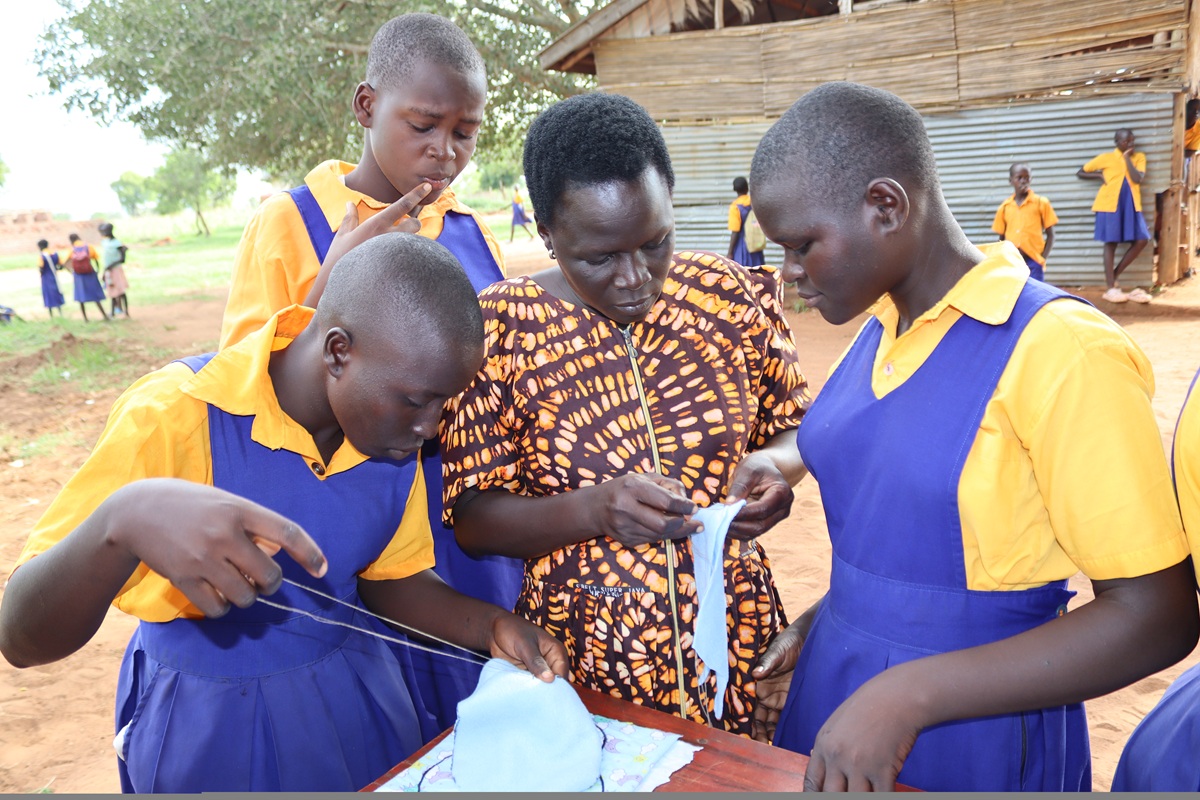
- Practical skills in making reusable sanitary pads as a sustainable, locally appropriate solution
By combining knowledge with hands-on learning, the training empowered learners with information they can apply immediately and share within their households and peer groups.
Providing Practical Support That Restores Dignity
To reinforce learning and ensure learners could put their knowledge into practice, participants received essential hygiene supplies. These included knickers, bars of soap, body oil, basins, buckets, and sanitary pads, responding to immediate needs that often go unmet in refugee settings.
For many girls, these items represent more than basic supplies; they restore dignity, reduce anxiety, and remove a key barrier to attending school during menstruation. The inclusion of reusable pad-making further promotes sustainability and reduces long-term dependency on disposable products.
Breaking Silence, Building Confidence
One of the most significant outcomes of the training was the shift in attitudes among learners. By openly discussing menstruation in a safe and supportive environment, the programme helped normalise conversations that are often silenced by shame and cultural taboos. Girls reported increased confidence in managing their periods, while boys gained understanding that fosters empathy and respect.
Teachers observed improved openness among learners and a stronger foundation for creating menstrual-friendly school environments—spaces where girls can learn without fear, embarrassment, or interruption.
Keeping Girls in School
Menstrual hygiene is not only a health issue, it is also an education and protection priority. When girls are equipped with knowledge, skills, and supplies, they are more likely to remain in school, participate fully, and pursue their aspirations.
This intervention demonstrates how targeted, community-sensitive approaches can deliver meaningful impact. By addressing menstrual hygiene holistically through education, skills development, and material support, the programme contributes to safer, more inclusive learning environments for refugee girls.
As refugee contexts continue to strain already limited resources, investments like these remain essential. They ensure that no girl’s education is disrupted by a natural biological process and that dignity, confidence, and opportunity are restored where they are needed most.