

By Yvonne Ayesigye
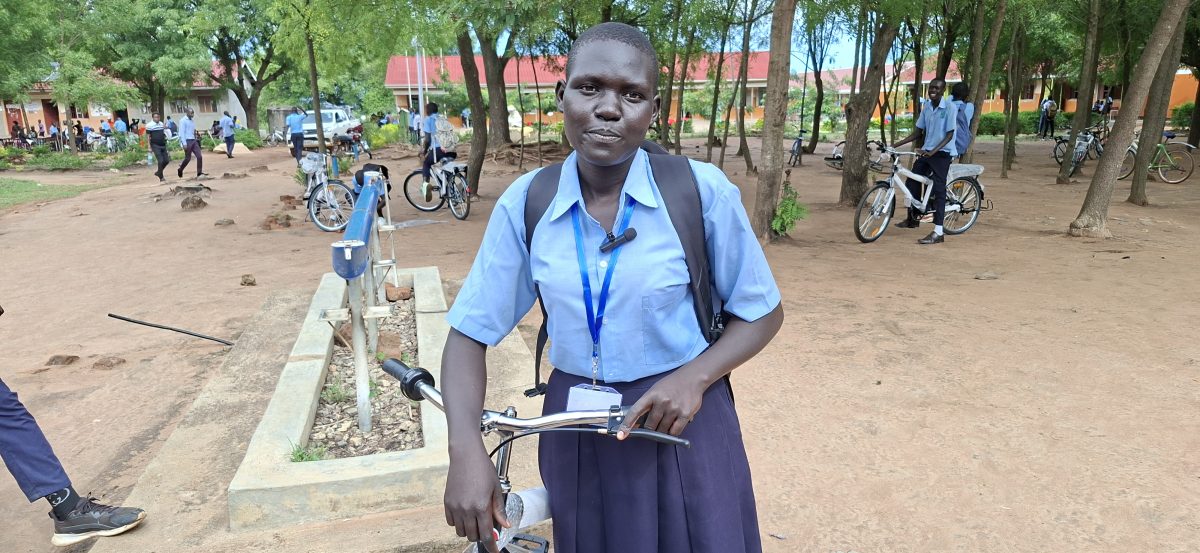
For Esther Ropani, a student at Imvepi Secondary School, getting to school meant covering about three kilometres. The journey was one part of her day. At home, there were also chores to complete, including fetching water and running other errands that are part of everyday life.
In 2024, Esther received a bicycle through Windle International Uganda, with support from Absa Bank Uganda. Since then, the bicycle has become more than a way to get to school. It has changed how she moves through her day.
Esther now uses the bicycle to travel to school, fetch water and complete errands at home. Tasks that once required more time and physical effort can be done more efficiently, allowing her to finish her chores and still have time and energy for school.
The difference matters. A three-kilometre journey, travelled on foot every school day, takes physical energy before a learner even reaches the classroom. For Esther, having a bicycle means she can arrive with more energy to give to her lessons and concentrate on her studies rather than spending as much of the day getting from one place to another.
The bicycle has also given Esther greater independence in travelling to and from school. She is less reliant on lifts or favours from boda-boda riders and other cyclists, reducing her exposure to the protection risks that girls can face when travelling long distances to school.
For Esther, the bicycle has therefore become part of her everyday routine: getting to school, fetching water, completing household responsibilities and still having the time and energy to learn.
What began as a bicycle provided to help a girl reach school has become a practical way of helping Esther manage the demands around her education, giving her back something just as important as transport: time and energy to learn.
The broader rationale is consistent with our interventions complementing education, which supported bicycles for 266 girls to address long and sometimes unsafe journeys to school.